

Israel is preparing to celebrate its seventy-eighth anniversary. For many Jews around the world, this event is still experienced as a miracle: seeing this state continue to develop despite a generally hostile environment, and remaining for them a kind of life insurance—especially in recent years, as they face a wave of antisemitism unprecedented since 1945 in the Western countries where most of them live.
In Israel, the way the state is viewed by the majority of Jewish Israelis is not the same as in the diaspora. More than 90% of them were born after its creation, and over three-quarters are native-born. Most reached adulthood in post–Six-Day War Israel, a country enjoying a period of openness to the world, confident in its defensive capabilities, and very proud of the successes of its army and intelligence services. For them, Israel is not an intellectual construct or an imagined hope, but a tangible reality—with landscapes that vary greatly from north to south, distinctive scents, and a diverse population divided into “tribes,” yet capable, when necessary, of coming together in mutual support.
This sense of confidence has been shaken twice: first in October 1973, and then 50 years later, on October 7, 2023. In both cases, the surprise attacks—by the Egyptian and Syrian armies in the first instance, and by Hamas in the second—exposed failures in the security services and the military in assessing the enemy threat, and above all their disregard for the adversary’s capacity to take initiatives that could endanger the country. But this failure was primarily that of the country’s political leadership, which in both cases, intoxicated by its own strength, did not seek to end the conflict between Israel and its neighbors. Yet after 1973, Israeli leaders twice made the right choices when the opportunity arose, taking the gamble for peace: first Begin with Egypt, then Rabin with Jordan. Together with Peres, Rabin even launched a political process with the Palestinians, which stalled after his assassination and has since come to a halt.
Today, emerging from a war fought on several fronts simultaneously—the longest since 1948—the Israeli population is exhausted and more divided than ever. Netanyahu has led them to believe, in order to erase his own responsibility and that of his government in the October 7 massacres, that he would succeed in eliminating all external threats by force: Hamas in Gaza, Hezbollah in Lebanon, and the Iranian nuclear threat. After more than two and a half years of war, his promises have proven empty. Hamas, though severely weakened, is still capable of rebuilding its forces in a devastated Gaza Strip where no political alternative is being offered to a population in distress. Hezbollah, despite a decapitated leadership, can still launch missiles and drones at northern Israel and could continue to do so even if pushed back beyond the Litani River. As for Iran, all the predictions Netanyahu made to Trump to persuade him to enter the war—that the Iranian regime would collapse following the elimination of most of its leaders—have so far proven wrong.
As in Gaza a few months ago, Israel is now heading toward a ceasefire with Lebanon and Iran—once again under pressure from Trump, who wants to end a highly unpopular war in the United States just months before crucial elections for him. The Israeli population will greet these ceasefires with both relief and the feeling of having been misled once again. Will it draw conclusions in the next elections? For these ceasefires to evolve into regional agreements, or even peace—particularly with Lebanon—would require a shift in political direction from the Israeli government, something hardly compatible with its current leadership.
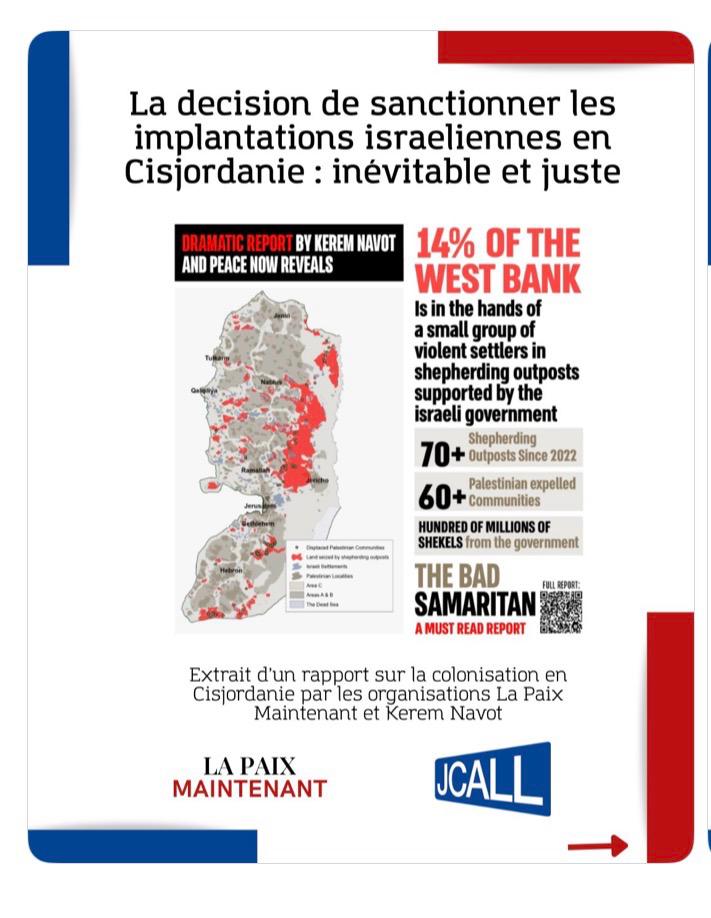
But it is likely on the domestic front that Netanyahu’s record will be judged in the upcoming elections. For the past four years, he has targeted all the foundations of the democracy on which the country was built: the Supreme Court, the only counterbalance to executive and legislative power; the independence of the press and broadcast media; the neutrality of the police, which has increasingly become a tool in the hands of his far-right minister Ben Gvir… One could go on listing the excesses of this government: the refusal to establish a national commission to examine responsibilities for the October 7 massacres; the corruption of his ministers, many of whom—starting with the prime minister himself—are involved in legal proceedings; the lawlessness in the West Bank, where the most extremist fringe of religious settlers carries out pogroms against Palestinians with impunity; the distribution of millions of shekels to Orthodox populations at the expense of those in the north and south of the country who have often lost their homes and jobs in this war; the passing of a law exempting the Orthodox from the burden of national defense, which largely falls on the working population even as soldiers are in short supply…
What conclusion should be drawn from these 78 years?
That of a country where a governing majority, for populist and electoral purposes, rushes through laws before possibly losing power in a few months—such as the vote on the death penalty intended solely for Palestinian terrorists guilty of murder, a law which, even if— as many hope—it is rejected by the Supreme Court, will remain a stain on the Knesset? A country where a governing majority decides to build 34 new settlements in Area C of the West Bank under its control, in order to make the prospect of a two-state solution impossible?
Or that of a country where the population rose up on October 7 to compensate for a failing state and help displaced people from the north and south? A country where the public has, week after week, mobilized in the tens of thousands to defend its democracy and block reforms that threatened it? A country where the population, against the choices of its government, refused to abandon its hostages and secured their release?
If 78 years is, for a man or a woman, the age at which one begins to take stock of one’s life, that is not the case for a country still under construction. Let us wish it—and above all its people—the wisdom, despite all internal and external threats, to make the right choices to preserve what was, in the eyes of history, a miracle 78 years ago: the creation of a liberal democracy, certainly imperfect but open to the world—“a state based on freedom, justice and peace as envisaged by the prophets of Israel; ensuring complete equality of social and political rights to all its inhabitants irrespective of religion, race or sex; guaranteeing freedom of religion, conscience, language, education and culture…” as its founding fathers wrote in the Declaration of Independence.
Happy birthday, Israel!