

Israel’s ruling coalition has just decided to put a bill to dissolve the Knesset to a vote next week. This decision was made to prevent the opposition from taking this initiative with the support of the Orthodox parties. Indeed, the latter, disappointed that the law exempting Orthodox youth from military service has still not been passed, were threatening to withdraw their support for the government. By preempting the opposition, the government thus retains control of the timeline. It will use every resource at its disposal to drag out the debate in the Knesset and set a date for future elections that suits it.[1]
A dissolution under pressure, a system under strain
The 25th Knesset will therefore have nearly reached the end of its term. Following the elections of November 1, 2022, the current government not only retained its majority of 64 members but expanded it to 68 after the four representatives of a small party led by Gideon Saar, a former Likud defector, joined its ranks. Saar was elected in 2022 on a joint list with Benny Gantz, leader of one of the two centrist lists. The 2022 elections were the fifth since 2019. Each of the four previous ones had brought to power narrow majorities that did not stand the test of time. The penultimate election in April 2021 was the only one to result in a change of government, bringing to power the duo of Naftali Bennett and Yair Lapid, who succeeded one another as prime minister.
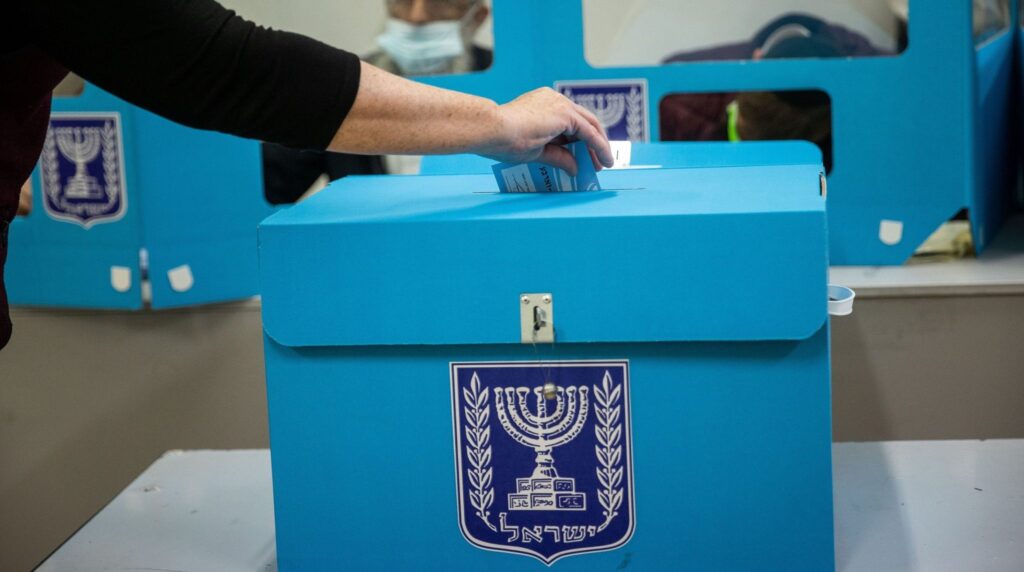
The multi-member proportional representation system[2] in place since the country’s founding requires parties, following elections, to reach an agreement to form a majority. The President generally grants a mandate to the leader of the list that received the most votes to negotiate a government agreement with other parties. Once signed, this agreement will subsequently limit the government’s room for maneuver, especially in any negotiations it must participate in on the international stage.
The dispersion of votes across a large number of lists (10 in the current Knesset and 13 in the previous one) keeps the ruling coalition under constant threat from even the slightest defection of lawmakers who decide to join the opposition, often following promises to grant them ministerial posts in the next term. This is what led to the fall of the rotation government in 2022.
To reduce the number of small lists, the Knesset voted to require them to exceed a minimum threshold of votes to be represented. This threshold has been steadily raised over the years. Since 2015, it has been 3.25% of the votes cast. This is why small parties have every interest in reaching an agreement before the elections to merge in order to ensure they exceed this threshold. Because they failed to do so with the Labor Party in 2022, following the latter’s refusal, Meretz, the left-wing Zionist party, is not currently represented in the Knesset, even though the total number of votes it received, combined with those of the Labor Party, exceeded those of the Orthodox party Yahadut HaTorah, itself the result of a merger between the Degel HaTorah and Agudat Yisrael parties, by nearly 45,000 votes. The Labor Party is currently represented in the Knesset by 4 members, while Yahadut HaTorah is represented by 7.[3]Another consequence of this system is the agreements made between the lists before the elections, in pairs, to pool the surplus votes obtained beyond those needed for their seats but insufficient to secure an additional one. When counted together, these votes can sometimes allow the list that received the highest number to secure an additional seat.
During the first five decades of the State, there was always one, then two dominant parties, which secured at least 40 seats, providing governments with a certain degree of stability.[4] At that time, there were genuine ideological differences between these two parties on economic and social issues, as well as on security and peace. Then these differences faded. The center and the left gradually rallied, as in most Western countries, behind an increasingly liberal economic policy at the expense of the most disadvantaged segments of society. As for security issues, they have been less divisive since the failure of the Oslo Accords and the outbreak of the Second Intifada. Only Meretz on the left and the “Arab parties” have continued to advocate in their platforms for a two-state solution to the conflict.
Due to this ideological homogenization, which makes it difficult to distinguish between the liberal right and the centrist parties, electoral lists are increasingly built around the personality of their leader. Voters are called upon to vote for a man or a woman rather than for a platform. Moreover, they do not always know the names of the other candidates on his list, let alone the order in which they are placed on it – a factor that determines whether they hold an electable position or not. Since his return to power in 2009, Netanyahu has by far dominated the Israeli political scene. He has even surpassed Ben-Gurion in terms of longevity as prime minister (19 years to date compared to 14 years).
Analysis of the vote among the four tribes
Former President Rivlin explained that Israel is composed of four tribes: the Orthodox (Haredim), the religious Zionists, the Arabs, and the liberal Jews. An analysis of electoral sociology over the past fifteen years shows a certain stability in voter behavior, with each group voting in line with its tribe, and defections from one tribe to another generally remaining few.
The first tribe, estimated at 13.9% of the population, is represented in the Knesset by the two Orthodox parties, Yahadut HaTorah, for the Ashkenazim, and Shas, for the Sephardim. Together, they have won between 16 and 18 seats in the eight elections held from 2009 to the present, with the exception of the 2015 election, in which they won 13. Their voters are generally very consistent in their voting and follow the recommendations of their rabbi. These parties have supported all governments led by Netanyahu. To date, he has indeed met all their demands regarding financial support for their yeshivot and educational system, or the passage of laws allowing them to continue living according to their traditions. While these parties did not originally identify as Zionist, because they believed the Jewish state should come into being only after the arrival of the Messiah and not through human intervention, in recent years there has been a shift among some of their voters toward parties representing religious Zionists. Shas, moreover, joined the World Zionist Organization in 2010, and since 2020, Yahadut HaTorah has been represented by the Eretz HaKodesh list, which is affiliated with it.
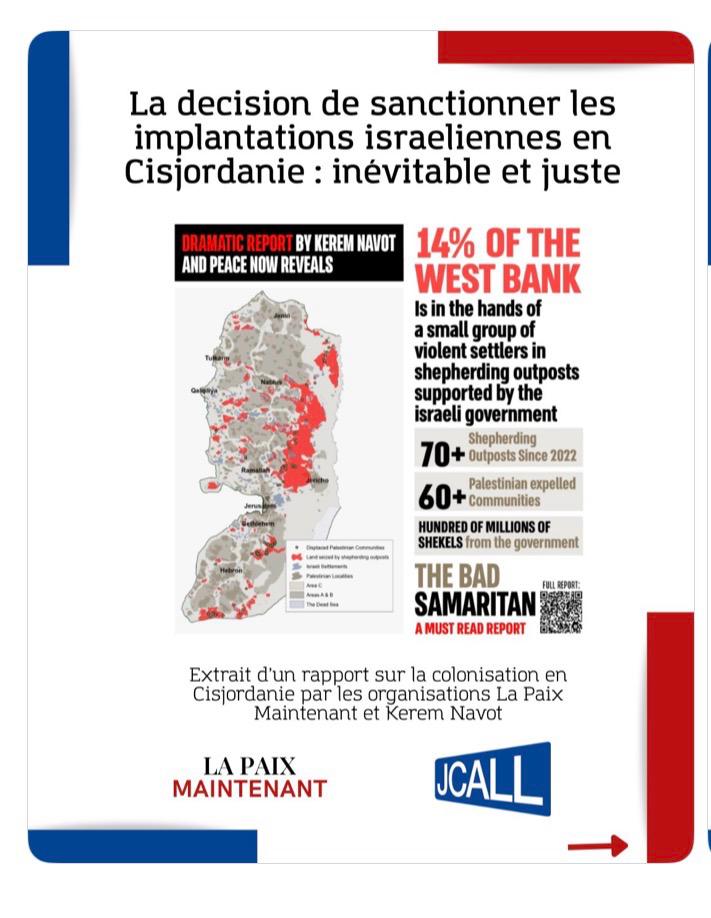
The second group, that of the religious Zionists, is currently represented in the Knesset by two parties, Hatsionut Hadatit (Religious Zionism) and Otsma Yehudit (Jewish Power), which together hold 14 seats. They stem from what was once the National Religious Party (Mafdal), created after the merger of two small parties in 1956, which, until 1977, participated in all Labor governments. The Six-Day War and the conquest of East Jerusalem and Judea and Samaria – the heart of biblical Israel – were interpreted by a large portion of their voters as an event of meta-historical significance that gradually shifted their ideological positions. Under pressure from its ultra-nationalist wing and Gush Emunim (the Faith Bloc), Mafdal became radicalized and transformed into an annexationist party, evolving, for some of its voters, toward a religious ethno-nationalism of a messianic nature. Since 2009, the religious Zionists have participated in all governments led by Netanyahu, who has always depended on their support to this day to keep his coalition in power. In return, Netanyahu has allowed their ministers to implement their unbridled annexation policy in the West Bank, with a marked acceleration during this legislative term.[5] Even more seriously, he has allowed the most extreme fringe of the settlers to carry out their near-daily abuses against Palestinians with impunity.[6] The leader of Hatsionout Hadatit is Bezalel Smotrich, the Minister of Finance and the Deputy Minister in the Ministry of Defense, who is de facto in charge of settlement activity in the West Bank, for which he allocates budgets.[7]
Itamar Ben Gvir, leader of Otzma Yehudit, is the current Minister of National Security, even though he himself has been arrested dozens of times in the past and convicted eight times for incitement to violence and racial hatred due to his political activities. He even issued a death threat against Rabin on television a few weeks before his assassination. He is now in charge of the police, which he has turned into a tool at his service. His photo, popping champagne in the Knesset after the vote on the death penalty intended solely for Palestinian terrorists guilty of murder – a law that should normally be struck down by the Supreme Court – will remain a stain on the Knesset.
It should be noted, however, that there has always been a peaceful religious Zionist movement, strongly opposed to this ideological shift, which generally votes for centrist or left-wing parties.[8] Furthermore, many voters in the Hatsionut Hadatit party do not currently support Smotrich’s ultranationalist positions and are considering not voting for him in the upcoming elections, as regularly shown by polls in which this party would fail to clear the electoral threshold, while Ben Gvir’s party would win 9 seats.
The third group, estimated at 21.5% of the country’s population, is represented by four Arab parties: Balad, a nationalist party; Ta’al, also a nationalist party calling for equality between Jews and Arabs; Hadash, a communist party; and Ra’am, an Islamist party. Until the Second Intifada in 2000, the voter turnout among Israeli Arabs (or Israeli Palestinians) was relatively comparable to the national average: around 80%. Then a divergence emerged between the two turnout rates. From 2003 to the present, it has declined in Arab localities, ranging from a low of 44.6% in 2021 to a high of 64.8% in 2020, while the national rate ranged from 63.5% in 2006 to 72.5% in 2015.[9] It is interesting to note that this rate increases when Arab parties run on a joint list, as was the case in 2019 and 2020, when it stood at 59.2% and 64.8% respectively, resulting in 13 and 15 elected members of parliament. Arab voters still overwhelmingly vote for Arab parties. In 2020, 87.6% voted for them and 12.4% for Jewish parties, and in 2022, 85.8% voted for Arab parties and 14.2% for Jewish parties. With a turnout of 57.8% in 2022, voters in Christian communities were more likely to vote for Arab parties (71.5%) than for Jewish parties (28.5%). As for the Druze, with a turnout of 50.9%, 90% vote for Jewish parties and 10% for Arab parties.[10]
One of the key issues in the upcoming elections will be the voter turnout among Arab and Druze voters. If it approaches that of Jewish voters, it could lead to the election of 15 or more members of Knesset, which would make the Arab parties the kingmakers between the two blocs. Of the four Arab parties, only Ra’am is considering joining a coalition with Jewish parties, as it did in 2020 in the Bennett/Lapid government. Ra’am is an Islamist party that has broken with the ideology of the Muslim Brotherhood.[11] It supported the Oslo Accords, and its leader, Mansour Abbas, repeatedly states on television that he recognizes Israel as a Jewish and democratic state and that his primary concern is the situation of Arabs in Israel, particularly their safety in the face of rising crime in their cities.[12] His voters are urging him to demand a ministerial post should his party join a future majority if the opposition wins the elections, something he did not do in 2022. For now, only the Democrats party led by Yair Golan is asserting the need for Israeli Arabs to be represented in the next government. The other Jewish parties within the current opposition, acknowledging the climate of anxiety in Israeli Jewish society since October 7, are, at best, avoiding taking a stance on this issue, or else asserting that they wish to form a coalition only with Zionist parties. If the election results confirm current polls[13], it will be difficult for the current opposition to do without Mansour Abbas’s support in the next government should they win. This is why Smotrich is currently directing his attacks against Bennett by questioning this future alliance, despite Bennett’s denials.
Finally, the vote of the fourth group, that of liberal Jews (around 55%). It will be the most decisive factor in the upcoming elections because it is among them that vote shifts from one list to another may occur. Six non-religious Jewish parties are currently represented in the Knesset. Together, they have 78 members of Knesset, or nearly two-thirds of the Knesset. These parties are:
- The right-wing Likud with 32 members of Knesset, joined by the 4 members of the list led by a former Likud defector
- Yesh Atid, the centrist party led by the current opposition leader, Yair Lapid, with 24 members of Knesset
- The National Camp, another center-right party, led by Benny Gantz with 8 members
- Israel Beiteinu, the secular, right-wing Russian-speaking party, led by Avigdor Liberman with 6 members
- The Democrats, formed from the merger of the Labor Party (Avoda) with Meretz, with 4 members.
Voters for these parties fall into two groups:
- Those who have decided how they will vote and will not change their minds. It can be estimated that this is the case for most voters of the Democrats and Israel Beiteinu. For Likud, which generally enjoys consistent support from its voters, it is interesting to note that there is a certain erosion in their voting intentions. According to a recent poll, 42% of them do not plan to vote for the party.[14]
- Those who have not fully decided how they will vote and are waiting to see the candidate lists and their leaders before making a decision. This indecision stems from the Israeli electoral system, where an individual can decide to run and assemble a list of candidates around their name just a few months before the election. A large portion of liberal Jews do not vote based on the parties’ platforms, but rather on the men and women who represent them, especially since there is not always a fundamental difference between these platforms, with the exception of those of the two more ideologically distinct parties: Likud on the right and the Democrats on the left. By doing so, voters may be in for unpleasant surprises after casting their ballots, because they do not always know the other candidates chosen by the list leader[15] or the platform he or she intends to implement, aside from a few generalities.
“Anyone but Bibi” is not a platform
To counter the stranglehold Netanyahu has exerted over Israeli political life for the past fifteen years, voters hoping for change look to every election for the arrival of a providential man or woman to defeat him. And many choose the candidate who seems capable of rallying a majority behind them to win.
Two new candidates, currently not in the Knesset, are now best positioned to defeat Netanyahu:
- Naftali Bennett, who served as prime minister for a few months in the previous rotation government. A right-wing, religious man who is committed to the rules of democracy and the rule of law, he is ready to form a coalition with centrist and left-wing parties, as he has done before. Since he currently has no Knesset members, his list is not eligible for state funding for political parties’ election campaigns. This is not the case for the current opposition leader, Yair Lapid, who holds 24 seats with his party, Yesh Atid. This is undoubtedly one of the reasons that led these two leaders to join forces within Ya’had, a joint list for the upcoming elections. Lapid, who is currently losing ground according to the polls, would thus ensure, under this agreement, the presence of about ten members of Knesset from his party among the top 24 on this joint list. For now, Ya’had, with 25 seats, is neck and neck with Likud in the polls.
- Gadi Eizenkot, a former chief of staff of Moroccan origin, elected in 2022 on the list led by Benny Gantz but who left it after disagreements, has created his own list, Yashar, which polls suggest would win between 12 and 15 seats. Gadi Eizenkot, who lost a son and a nephew, both soldiers, during the war in Gaza, is very popular.
In the few months leading up to the elections, we can expect many changes until the final lists are submitted. On the right, some voices within Likud are calling for the formation of a right-wing list, without Netanyahu, to win back disillusioned voters and prevent them from joining other centrist lists. In the center, Benny Gantz, who currently holds 8 seats, would not clear the minimum threshold. Following Eizenkot, other lawmakers have announced their departure from his party, and there is significant pressure for him to withdraw from political life to avoid a loss of votes in the liberal camp. Eizenkot, known for being a skilled strategist as Chief of Staff, is biding his time before deciding whether to join the Bennett/Lapid list, Liberman’s list, or to maintain his independent list.
In any case, there are three conditions for the current opposition to be able to win these elections:
- That the voter turnout among Arabs and Druze approaches that of Jews, despite all the intimidation attempts to be expected from the right to discourage them from voting.
- That the centrist and left-wing lists at risk of failing to pass the minimum threshold withdraw or merge with another list.
- That the many expatriate Israelis return to vote.[16]
These conditions are certainly necessary, but they are not sufficient, just as “anyone but Bibi” cannot constitute a platform. Given the current state of Israeli society, with its internal divisions and the climate of violence fueled by the far right, we must offer a mobilizing vision for rebuilding the nation, restoring public order, particularly in Arab towns, a fight against corruption, and respect for the rules of democratic governance as they have been established since the creation of the state and which this government has sought to dismantle. Despite the war, and no doubt because of the trauma of October 7, the Palestinian issue will not be on the agenda of the election campaign. The majority of the population believes there is no reliable partner on the Palestinian side with whom to begin any negotiations. It is therefore a subject that political parties will prefer to avoid, focusing solely on security issues. The Democrats and the Arab parties are the only ones speaking of resolving the conflict, and not merely managing it.
The impact of the war on a society still traumatized
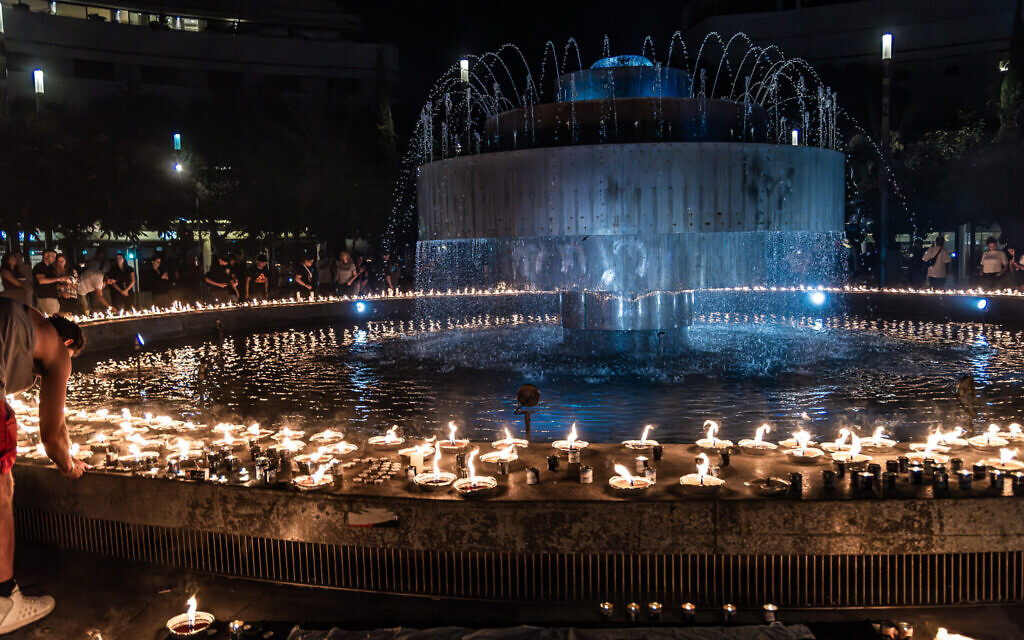
Since October 7, 2023, the country has been at war, the longest in its history, a war punctuated by ceasefires, each time imposed by President Trump. Until the return of the remains of the last hostage on January 26, the entire society lived in the shadow of October 7, which will remain the worst day since the country’s founding. 843 days had passed since that black Saturday. 843 days during which the media daily recalled the tragic events of that day, the acts of heroism by those civilians and soldiers who found themselves helpless in the face of an attack by several thousand Hamas members on Israeli territory. 843 days during which tens of thousands of Israelis gathered, week after week, at the Hostage Square in Tel Aviv and across the country, repeating this phrase to the hostages’ families: “ You are not alone, we are with you!” More than just a message of solidarity, this cry reflected a deep sentiment: that of a shared destiny between these demonstrators – and with them nearly 80% of the population – and the families of the hostages. The return of the remains of the last hostage has not yet allowed Israeli society to heal its wounds. It will take a long time for them to heal. More than twenty thousand civilians and soldiers were wounded during this war, and many of them will suffer lifelong consequences. As for those traumatized, they number in the hundreds of thousands, including both civilians and military personnel.[17] Rebuilding the destroyed homes in the kibbutzim and cities will take time; healing the wounds of the mind will take much longer.
But this latest ceasefire did not last long. Faced with stalled negotiations between the Americans and Iranians, Netanyahu succeeded, according to most sources, in convincing President Trump to launch a joint attack on Iran on February 28 and eliminate its political leadership through a targeted airstrike. Despite this success and after more than two months of war – which has plunged the world into an unprecedented economic crisis with the blockade of the Strait of Hormuz – the two allies no longer share the same objectives. Trump is seeking a way to end a war that is unpopular in the United States, while Netanyahu, whose poll numbers are falling, persists in wanting to continue it until the fall of the Iranian regime. According to most analysts, including Israeli ones, this objective now seems difficult to achieve by continuing the war, nor are the goals of disarming Hezbollah in Lebanon or Hamas in Gaza. Although 64% of Israeli Jews and 48.5% of Israeli Arabs believe that ending the war with Iran is not in Israel’s interests[18], this issue does not appear to be impacting the polls. The military successes achieved, which have not yet translated into political gains, have nonetheless not been sufficient to allow Netanyahu to regain the support he had before October 7.
Many lessons can be drawn from this war in terms of security and organization. The IDF General Staff has likely already taken them into account. But what has not been done so far is to criticize the political approach that led to the October 7 disaster. This is what Netanyahu and his government, who bear primary responsibility, are trying to avoid by refusing to establish a national commission of inquiry. While all senior officers on duty on that date have already resigned, political leaders refuse to take responsibility. The government has decided to appoint a government commission instead of the national commission demanded by the majority of the population (80%). The issue of appointing a national commission of inquiry will be one of the central issues of the election campaign.
The second issue will be the corruption that has plagued the government in recent years, with the surge in the number of cases currently under review against sitting ministers and ongoing investigations revealing collusion between the Prime Minister’s inner circle and Qatar. To these cases must be added the trial of Netanyahu, who has been under indictment since 2020 for corruption, fraud, and breach of trust. The Prime Minister’s cross-examination regarding these charges is nearing its conclusion, and it is possible that he will be convicted. This is why Netanyahu has attempted, with President Trump’s support, to pressure President Herzog to grant him a pardon. Herzog has refused to do so for the time being.
The third issue concerns the exemption of Orthodox Jews from military service: a bill on this matter was scheduled to be introduced during the final parliamentary session of this legislative term, which began on May 10. It is unlikely to be introduced in the event of an early dissolution because it might not secure the support of all members of the ruling coalition. This issue is of concern to the majority of the public, both secular and religious Zionists, who demand that Orthodox Jews perform military service, or civil service for some of them. While the army is short thousands of soldiers to ensure the country’s defense, it is necessary for the entire population to share in the burden of defense and the management of state services.
The fourth issue is judicial reform, which the public had succeeded in blocking through a mobilization unprecedented in its scale and persistence throughout 2023, up until October 7. After putting this project on hold during the first year of the war, the government resumed it in 2025. It plans to pass a series of laws by the end of this legislative session that it considers a priority for its electoral base. These include the bill aimed at splitting the role currently held by Ms. Gali Beharav-Miara as both Attorney General and the government’s legal advisor, which would render the position meaningless, and the bill to transform the police inspection service into an “autonomous” agency reporting directly to the Ministry of Justice. All these laws have a single goal: to consolidate the government’s control over the judiciary. In the event of an early dissolution, it is unlikely that the government will succeed in passing all these laws, but it may at least strive to pass the one regarding the separation of powers of the government’s legal advisor, which is very important to it.
This attack on one of the bulwarks of democracy – the Supreme Court – is accompanied by the government’s attempts to also establish its control over the media. In particular, it seeks to shut down Galei Tsahal, the army’s public radio station, which is very popular among young people. This plan, currently blocked by the Supreme Court, is part of the media reform proposed by Communications Minister Shlomo Karhi. Opponents of this plan, including the Attorney General and media watchdog organizations, have warned that it raises “serious concerns about a grave infringement on freedom of expression and freedom of the press” and that it concentrates power in the hands of a Communications Minister and a government that have repeatedly labeled the media “enemies of the state.”[19] The bill to be put to a vote would give the Minister of Communications control over the appointment of media oversight bodies and the ability to create different regulatory channels with the aim of benefiting certain channels and threatening others.
Crucial elections for Israel and also for the diaspora
These issues provide a glimpse into the concerns of Israeli society, to which must be added the economic situation with the rising cost of living. All these issues will be at the heart of the debates in the upcoming election campaign. The majority of the Israeli population is aware of this. These elections are crucial for the country’s future because it faces a choice of regime.
Either Israel will continue to transform, under the leadership of a right wing increasingly dependent on its ultranationalist and supremacist far right, into an illiberal democracy[20]: “a regime where political power is concentrated in the hands of a single person, the very one who controls the government and the Knesset: the Prime Minister,” as former Supreme Court President Professor Aharon Barak stated during a protest against judicial reform on January 3 at Habima Square in Tel Aviv.[21] Israel, under the sway of religious parties pursuing their messianic dreams[22], could decide to annex all or part of the West Bank and establish a permanent authoritarian and repressive government in “Judea and Samaria.” Such a choice would certainly lead to an increase in the emigration of young Israelis, often university graduates, to Western countries, even though many of them are the architects of this country’s innovation and economic success.
Either Israel will remain what its founding fathers intended and enshrined in the Declaration of Independence: a liberal democracy, “a State based on freedom, justice, and peace in accordance with the ideal of the prophets of Israel; (which) will ensure the fullest social and political equality for all its inhabitants without distinction of religion, race, or sex; (and) will guarantee freedom of worship, conscience, language, education, and culture…”.
These elections will also be crucial for the diaspora. If the majority of Israelis vote to keep Netanyahu and his coalition in power, it risks causing a rift with the liberal wing of the diaspora in Western countries, at a time when that community is facing a resurgence of antisemitism, and, for some of its members, is questioning its future, sometimes seeking a host country. Such a vote, if followed by the implementation of annexationist plans in the West Bank, would further isolate Israel on the international stage and damage its image, which has already been severely tarnished by the conduct of the war in Gaza.
David Chemla
source : La revue K May 20, 2026
[1] This should take place no later than October 27. Given the Jewish holidays marking the start of the new year – Rosh Hashanah begins on September 11 – it is possible that, in the event of an early dissolution, the elections could be held on September 1.
[2] The multi-member proportional representation system (also known as proportional representation or list-based proportional representation) is an electoral system in which seats are allocated among lists of candidates based on the percentage of votes received.
[3] 150,793 votes for Meretz, 175,992 for the Labor Party (Avoda), and 280,194 for Yahadut HaTorah. Complete results: https://fr.wikipedia.org/wiki/%C3%89lections_l%C3%A9g
[4] Election results in 1988: Likud 40 and Avoda 39, and in 1992: Avoda 44 and Likud 32.
[5] This government established 102 settlements, an 80% increase (there were 127 previously), and 178 outposts. These are often mobile units on a hill that are later connected to the road network. See the data on the Peace Now website: https://peacenow.org.il/en/settlements-watch/settlements-data/population
[6] 1,485 violent attacks committed by settlers in the West Bank recorded in 2025, compared to 896 in 2024, 1,135 in 2023, 749 in 2022, 480 in 2021, and 348 in 2020. According to the IDF, there were 149 Palestinians wounded and 6 killed in the West Bank in 2024, and 200 wounded and 4 killed in 2025. 378 attacks against Palestinians, resulting in 8 deaths and 200 injuries, were recorded during the first 40 days of the war launched against Iran on February 28, and more than 10 mosques have been set on fire over the past year in the West Bank.
[7] More than 19 billion shekels have been allocated by this government since its inception to expand settlement activity at the expense of the needs of the population in Israel: https://peacenow.org.il/en/nis-19-billion-for-settlements
[8] Some are involved in movements such as Oz veshalom or Smol emuni (https://www.lapaixmaintenant.org/fideles-de-gauche-smol-emuni/). High-profile religious figures exemplify this trend, such as the liberal rabbi Gilad Kariv, currently a member of the Knesset for the Labor Party (now The Democrats), or Yaya Fink, one of the protest leaders and a former member of the Labor Party, who, along with other protest leaders, has joined The Democrats.
https://www.facebook.com/reel/1536207191348784
[9] https://en.idi.org.il/articles/47986
[10] https://en.idi.org.il/articles/46271
[11] https://www.i24news.tv/fr/actu/israel/politique/artc-mansour-abbas-annonce-la-rupture-de-ra-am-avec-le-conseil-de-la-choura-et-les-freres-musulmans
[12] The number of Israeli Arabs killed rose from 116 in 2022 (Bennett/Lapid government) to 245 in 2023, 230 in 2024, and 252 in 2025, with 80 killed since the start of the year.
[13] According to the average of polls on May 10, the current coalition would have around 50 seats, the “Jewish” opposition lists around 60, and the Arab parties around 10. https://special.n12.co.il/elections2026
[14] https://www.mako.co.il/news-israel-elections/2026/Article-9fd5e990a470e91026.htm&utm_source=Email&utm_medium=Share
[15] Only two parties have announced so far that they will hold primaries, as they always do, to select their candidates: Likud and the Democrats.
[16] It is estimated that more than 200,000 Israelis have left the country since October 7.
[17] 600,000 requests for care have been made to mental health centers. From October 7 to the end of 2025, there were 280 suicide attempts and 50 suicides among soldiers, not including those who took their own lives after returning from the army. https://www.haaretz.com/israel-news/2026-01-01/ty-article/.premium/22-israeli-soldiers-died-by-suicide-in-2025-the-highest-number-in-15-years/0000019b-795f -d37f-abbf-fd5f1d9b0000
[18] https://en.idi.org.il/articles/64219
[19] https://fr.timesofisrael.com/la-loi-sur-les-medias-risque-de-livrer-la-presse-a-des-interets-financiers-partisans/
[20] See the conference organized on February 9 by a coalition of organizations including JCall and La Paix Maintenant. https://fr.jcall.eu/a-la-une/israel-vers-une-intensification-de-loffensive-contre-la-democratie-enregistrement-de-la-reunion-du-9-fevrier
[21] https://www.lapaixmaintenant.org/aharon-barak-sommes-nous-encore-une-democratie-liberale-la-reponse-est-non/
[22] See the conference organized on March 23 by a coalition of organizations including JCall and La Paix Maintenant
https://fr.jcall.eu/a-la-une/israel-face-au-messianisme-politique-enregistrement-de-la-reunion-du-23-mars