

This is the last newsletter we will be sending you before 27 October, the date of the next election in Israel. Throughout the year, we have analysed the consequences of the Netanyahu government’s policies, including its attacks on democracy and the rise in violence, both in the West Bank against the Palestinian population and within Israeli society, all against a backdrop of increasingly prevalent messianic rhetoric. We have also examined what is at stake in these elections, both for Israel’s identity and future and for Jewish citizens of the diaspora, whether or not they feel a connection to the country. Some of them, particularly younger people, are finding it increasingly difficult to understand the political choices being made.[1]
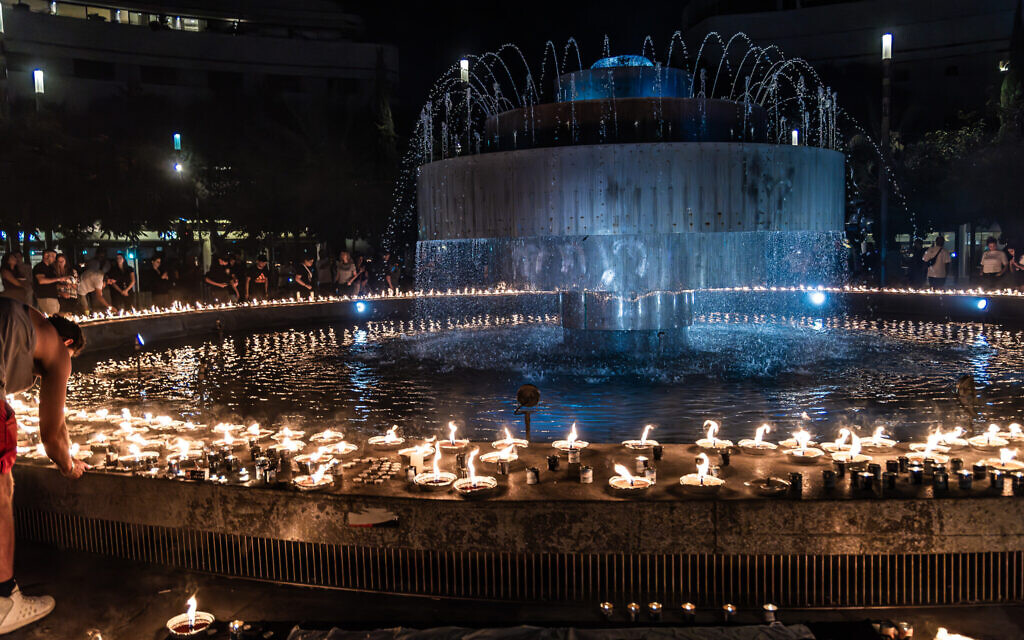
We have just commemorated the third anniversary of the 7 October massacres. In Israel, this date will remain for a long time a national trauma, experienced by everyone as a personal tragedy, even by those who had no relatives or friends among the 1,200 people killed and the 251 people taken hostage that day. On 7 October, civilians were attacked by Hamas terrorists and, because of the limited presence of the IDF on the front line, were left to defend themselves. They were subjected to rape, torture and massacre. For the first time in their history, Israelis found themselves in the same predicament as their grandparents, who had been left defenceless during the Shoah, despite the full might of their own army. State institutions had ceased to function, and it took the army several days to regain control of the areas infiltrated by Hamas members.
It was civil society that stepped in to fill the void left by the state. From the very next day, people came to the aid of those displaced from the south and north of the country, provided food for soldiers deployed to the front, and, after the ceasefire, mobilised to help with agricultural work in moshavim and kibbutzim suffering from labour shortages, or to rebuild destroyed homes. This was the same civil society that had demonstrated against the judicial overhaul sought by the government before the war, successfully managing to halt it. It was also this same society that stood alongside the hostage families and supported their campaign until the hostages were released.
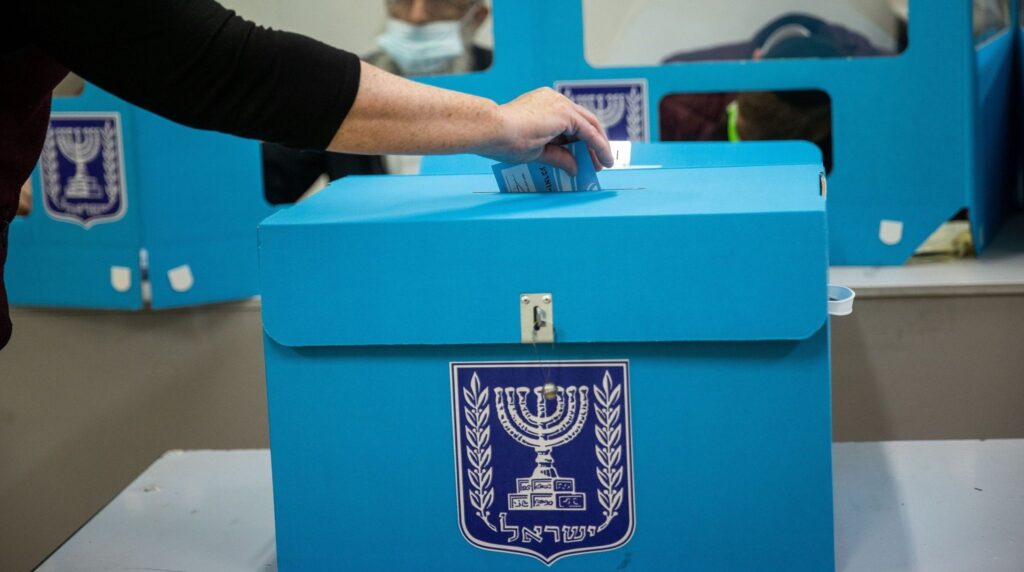
Today, it is this very same society that will determine the outcome of these elections. Will it mobilise with the same determination on election day? One of the keys to the outcome is voter turnout. In 2022, turnout stood at 70.6%. However, it varied considerably across regions and population groups. It was 60% in liberal cities such as Tel Aviv, 64% in right-wing cities such as Ashdod, 75% in West Bank settlements and 82% in ultra-Orthodox cities. The more liberal voters turn out, therefore, the higher the overall turnout will be, raising the number of votes each list needs to secure representation in the next Knesset.[2] According to opinion polls, two small right-wing lists could consequently fail to clear the electoral threshold, weakening the right-wing bloc as a whole.
Arab voter turnout will also be one of the determining factors in these elections. In 2022, turnout among Arab voters was 53.2%, and the parties representing them won 10 seats. In 2020, however, when turnout reached 64.8%, they won 15 seats. As opinion polls this year point to strong mobilisation among Arab voters, joined by many Jewish voters as well, Arab parties could find themselves in the position of kingmakers, since neither the current governing coalition’s bloc nor the change bloc would be able to secure a majority on its own.
Of the four Zionist opposition parties[3], only the Democrats support including Ra’am, the Islamist party led by Mansour Abbas, in a future government. Ra’am had already been part of the Bennett-Lapid government in 2022. Will the other three parties change their position after the election if it becomes clear that Ra’am’s support is essential to forming a government? In this regard, it is worth noting that, according to a survey by the Israel Democracy Institute (IDI),[4] 50% of opposition voters would support such an arrangement, while a further 14.5% would accept Ra’am’s external support.
We should remember that Yitzhak Rabin’s government, in office from 1992 to 1995, did not have a parliamentary majority of its own. With the external support of Arab parties, it was nevertheless able to secure Knesset backing for the Oslo Accords.
According to opinion polls, 10% of voters have not yet decided how they will vote. Their hesitation has less to do with choosing between the two blocs—only 2.5% are undecided on that question—than with choosing between parties within their preferred bloc. There is also a risk that, at the last minute, some voters will opt for tactical voting, casting their ballots for the dominant party within their bloc in an effort to strengthen it, potentially weakening the other parties in that bloc.
Fearing possible disruption on election day, many volunteers have signed up to serve as election officials and vote counters. Despite these concerns and the tensions currently prevailing in the region, let us hope that these crucial elections will proceed as planned.
The official results will be announced on 4 November, once all votes have been counted, including those cast by soldiers and diplomats abroad, who are the only people authorised to vote from outside the country. President Herzog will then ask the leader of each electoral list to nominate their preferred candidate for prime minister. The president will generally entrust that candidate with the task of trying to form a government. The candidate will have 28 days to do so, with a possible 14-day extension at their request. If they fail, the president may nominate another candidate, who will in turn have just 28 days to succeed in forming a government. If that attempt also fails, the country will have to return to the polls in the following months. In the meantime, the current government will remain in power.
Let us hope this does not happen and that the election produces a clear result, enabling Israel to turn a new page in its history.
David Chemla
[1] see the recording of our meetings on our JCallTv channel on YouTube
https://www.youtube.com/user/JCallTv
[2] For a list’s votes to count towards representation in the Knesset, it must meet the minimum electoral threshold, set at 3.25% of the total valid votes cast.
[3] Yashar with Gadi Eizenkot, Beyahad with Naphtali Bennett and Yaïr Lapid, Israel Beteinou with Avigdor Liberman and The Democrats with Yaïr Golan
[4] Israel Democracy Institute (IDI): https://en.idi.org.il/articles/62950